


3M vs XPEL vs STEK: Real-World PPF Test
If you’re trying to choose between 3M and XPEL paint protection film, you’ve probably noticed how inconsistent the information online can be. Marketing claims, installer opinions, and forum debates rarely give you a clear answer.
So we tested them ourselves. We purchased 3M Pro Series and XPEL Ultimate Plus independently and compared them side by side under identical conditions in our shop. No sponsorship. No supplied materials. Just real-world testing backed by over 15 years of professional installation experience.
Below you’ll find the full comparison video and a detailed breakdown of the results — including performance differences you won’t see on a spec sheet.
At-a-Glance Test Results
Below is a quick performance summary from our side-by-side comparison of 3M and XPEL paint protection film, with additional STEK results included for context. These highlights reflect real-world testing conducted under identical conditions in our shop.

These results provide a high-level overview, but they don’t tell the full story. Each category revealed important nuances that spec sheets simply don’t show.
Watch the complete comparison video below for a detailed breakdown of how each film performed, then continue to full test explanations, installer insights, and our professional recommendations.
The video is long but it covers a lot of key characteristics and is worth watching!
This page is provided for informational and educational purposes only. Custom Wraps is an independent paint protection film installer and is not affiliated with, endorsed by, sponsored by, or authorized by XPEL, STEK, or their related companies.
Brand names are used only to identify the products discussed in this independent comparison. All trademarks remain the property of their respective owners. Opinions and performance observations are based on our own installation experience, in-house testing, and publicly available product information.

Official CERTIFIED PPF INSTALLATION company. Over 15 years of experience
Full PPF Comparison Test Results.
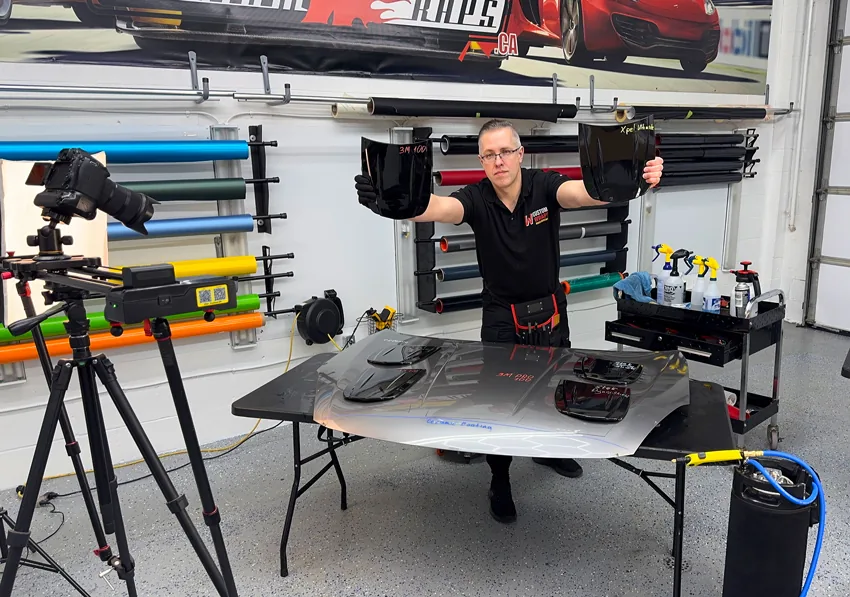
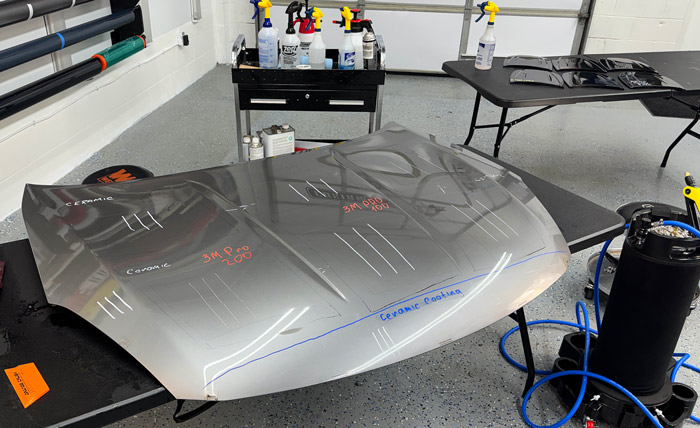
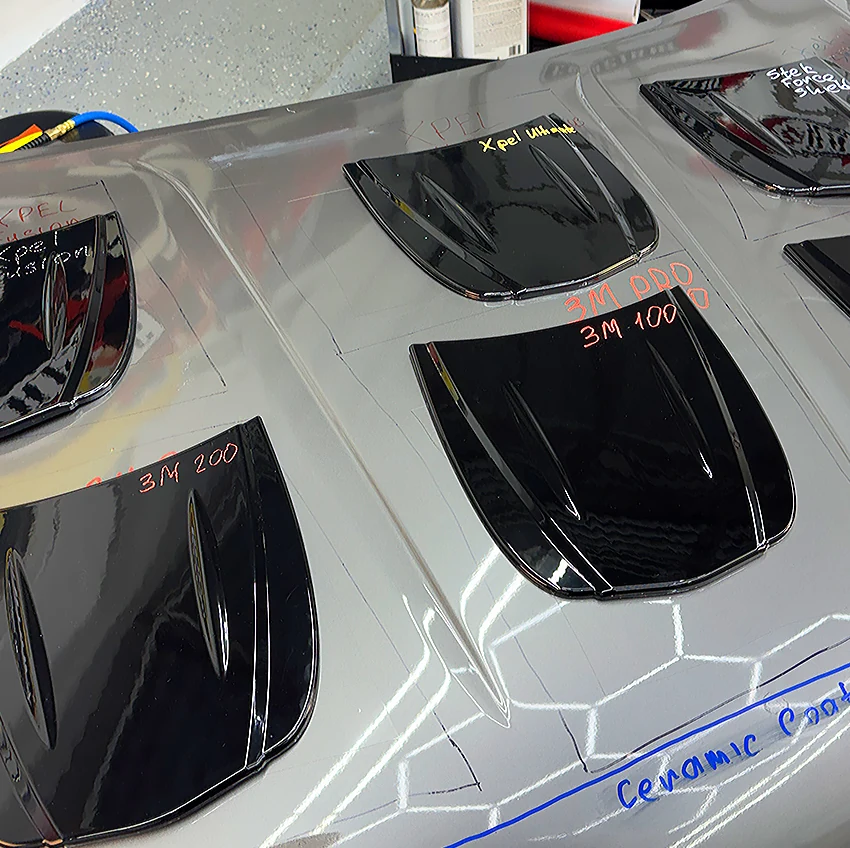
This page documents our side-by-side paint protection film test comparing 3M Pro Series and XPEL under the same conditions in our shop. We also included STEK in the testing process for additional context, but the primary focus remains 3M vs XPEL. All samples were installed and tested in-house — no sponsorship and no supplied materials.
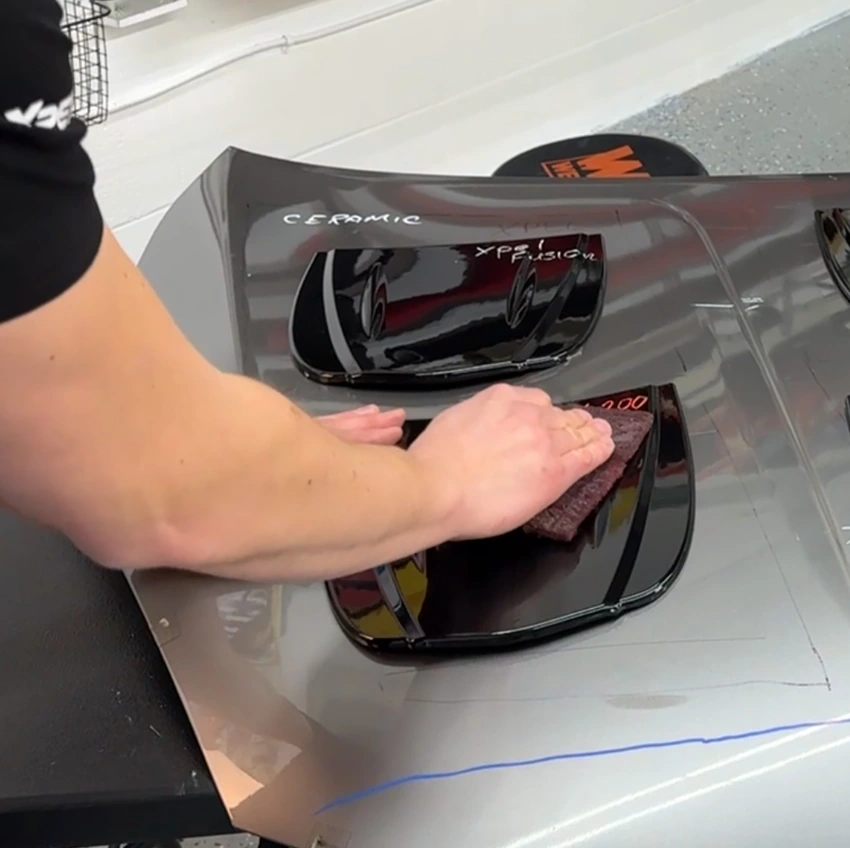
Methodology: All films were installed on the same painted hood (plus mini sample hoods) in one session, labeled by section, and given equal curing time. Each test was performed in the same order using the same tools and materials across every section, and results were assessed visually under consistent shop lighting.
Jump to a test
Surface Clarity and Smoothness
We started with the simplest evaluation: how each film looks once installed. This includes optical clarity (how transparent the film appears), surface texture, and how “clean” the film looks across reflections under shop lighting.
In this comparison, all films looked very strong overall. Side-by-side, the differences in clarity were minor. Modern premium PPF is far more consistent than it was years ago, and most reputable films now deliver a high-gloss, high-clarity finish when installed properly.
Where small differences did appear, they were most noticeable when you looked at reflections at an angle and around edges and transitions. These are the areas where installers and detail-oriented owners tend to spot “character” in a film.
Outcome: Visual differences were minimal overall, with XPEL showing a slight edge in initial appearance and “fresh install” gloss in our setup.

Notable Results in This Category
XPEL Ultimate Plus. Marginally better looking when stretched during installation.
All PPF films have almost identical look when installed on flat surface. Indistinguishable from one another.
None in this category.
Hydrophobic Performance Test
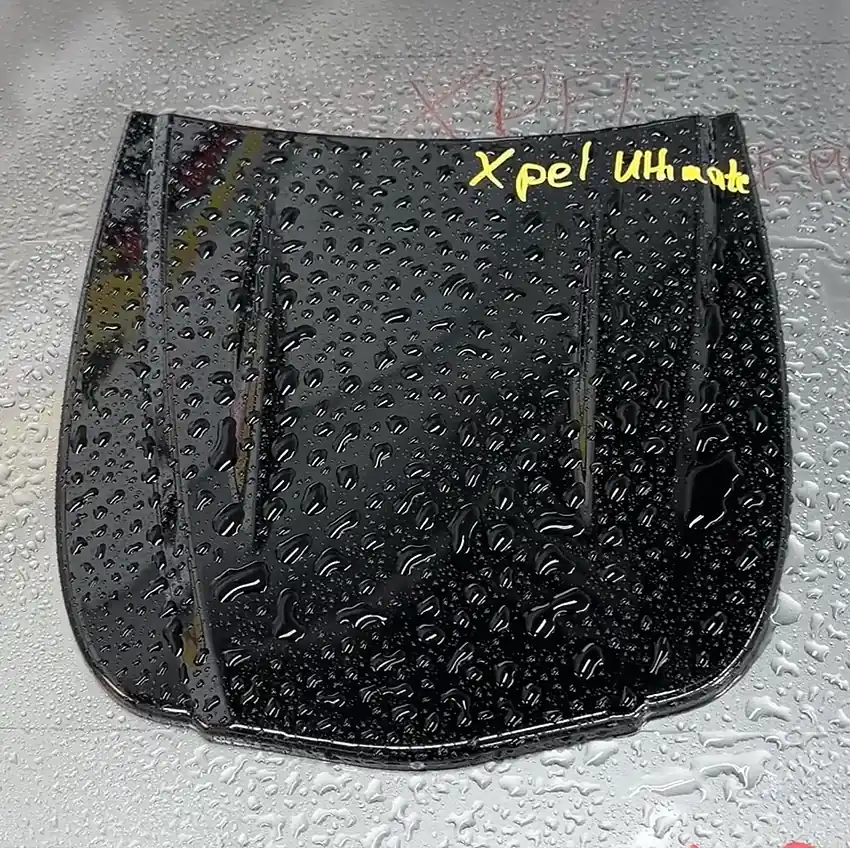
Next we evaluated water behavior on each surface: beading (how tightly water forms droplets) and sheeting (how quickly water runs off). Hydrophobic performance can affect day-to-day cleaning, spotting, and how “fresh” the car looks between washes.
In our test, 3M Pro Series 100 stood out with very strong water repellency even among non-ceramic coated PPF samples. It behaved closer to what many people expect from a coated finish. XPEL Ultimate Plus also performed strongly in this category in our setup. Non-ceramic coated STEK FORCEshield repelled water the worst of all the samples.
Coated or “ceramic-infused” PPF samples generally performed well, but real-world hydrophobic behavior can vary based on curing, handling, and what the surface has been exposed to. This is one category where marketing claims can be very strong — and where results are best judged by real testing. The difference was marginal in our opinion.
Outcome: Hydrophobic performance was strongest on 3M Pro Series, with XPEL also performing very well in our test environment.
What this means: If you care about easy maintenance and like the look of tight water beading, hydrophobic behavior is worth considering. Just remember: coatings and hydrophobic top layers can wear over time, and maintenance habits matter.

Notable Results in This Category
3M Pro 100. Best water repelling among non-ceramic coated films.
3M both samples showed excellent hydrophobic properties. All ceramic coated samples looked similar.
STEK FORCEshield.
White Marker Removal Test
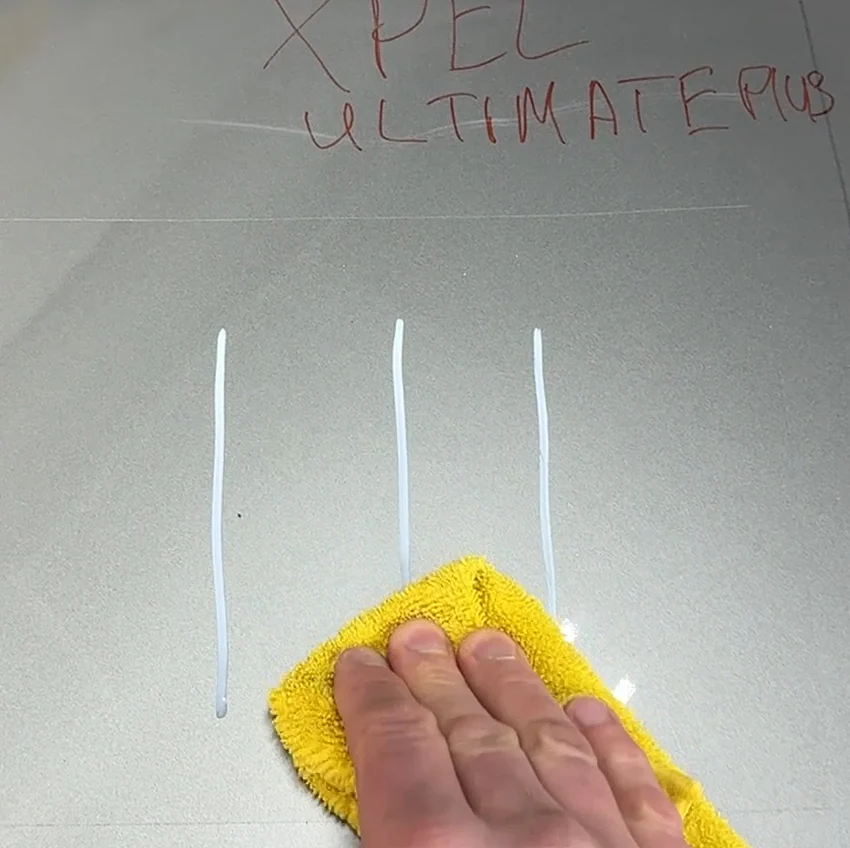
This test is a practical stand-in for how a film handles surface staining and day-to-day contamination. We applied white marker lines to each section and attempted removal with a microfiber towel first, then with added help when necessary.
In our results, both 3M samples cleaned up exceptionally well. Notably 3M Pro-series 200 was the easiest film to clean. Marker ink wasn't even sticking to the surface and behaved more like water. STEK also performed strongly, with marker removal being straightforward in most cases. These surfaces tended to “release” the marking without excessive effort.
The biggest surprise here was that both XPEL Ultimate Plus and XPEL Fusion Plus required more effort to fully remove the marker. The marks did come off, but only with additional cleaning help from alcohol and water rather than a simple wipe.
Outcome: Marker removal was easiest on 3M, strong on STEK, and required more work on XPEL in our test.
What this means: If you daily-drive your car and wash it often, surface stain resistance and easy cleanup may matter more than small differences in day-one gloss. For owners who are very particular about maintenance effort, this category is important.

Notable Results in This Category
3M Pro 200. Easiest removal. Ink barely held on the surface.
3M and STEK samples performed well. XPEL performance was below expected standards.
XPEL Ultimate Plus and XPEL Fusion Plus
Surface Marring Test
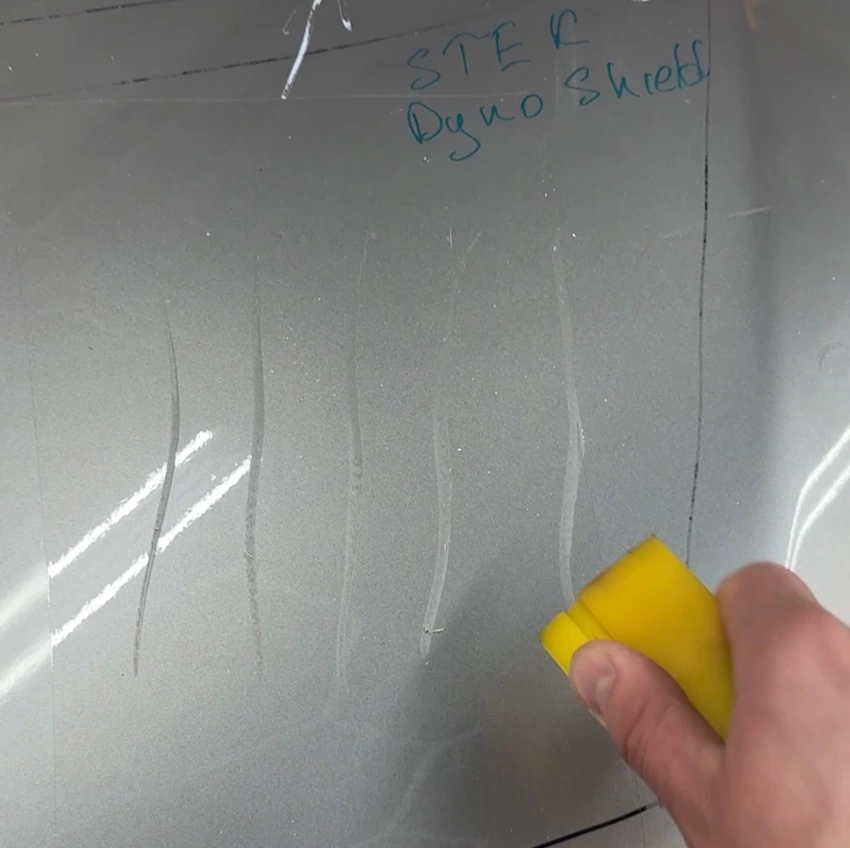
Surface marring is what happens when a top layer shows visible marks from contact, pressure, or improper washing. We simulated real-world “light abuse” using consistent pressure and contact to see how quickly each film showed streaking or surface deformation.
The pattern here largely echoed the marker test. 3M performance was excellent, and STEK was close behind in how easily the surface cleaned up and returned to a uniform finish. These surfaces were less “fussy” after contact.
On XPEL, the surface required more effort to restore to a perfectly clean look after streaking. We had to use pure alcohol to completely remove marks from both XPEL samples. This does not mean the film is “bad” — it means that in our test, visible surface marks were more persistent until additional cleaning steps were used.
Outcome: Best resistance and easiest cleanup were seen on 3M, followed closely by STEK, with XPEL requiring more effort to remove visible streaks.
What this means: If you’re the kind of owner who notices every streak or mark after a wash, marring behavior affects how “easy” a film feels to live with. If you detail your vehicle properly and consistently, differences can be less noticeable day to day.

Notable Results in This Category
3M and STEK. Easy marks removal.
3M and STEK samples performed well. XPEL didn't persorm according to expectations.
XPEL Ultimate Plus and XPEL Fusion Plus
Self-Healing Test
Self-healing is one of the core benefits of modern PPF. We created light surface scratches and then applied heat to observe how quickly and completely each film recovered. Most premium films can heal light defects; the difference is usually in the speed and completeness of recovery.
Across the board, light scratches improved significantly with heat. As expected, deeper or more aggressive scratches tended to remain visible to some extent. That’s normal: self-healing has limits, and the top layer can only recover so much.
In our visual evaluation, 3M Pro Series appeared slightly stronger in recovery on lighter defects compared to the rest, though the difference was not extreme. Most drivers would consider all of the tested films acceptable in this category.
Outcome: All films healed light scratches well. 3M Pro Series showed a small edge in our test.

Notable Results in This Category
3M Pro-Series
All films performed well in this category with only a marginal difference.
None in this category
Chemical Resistance Test
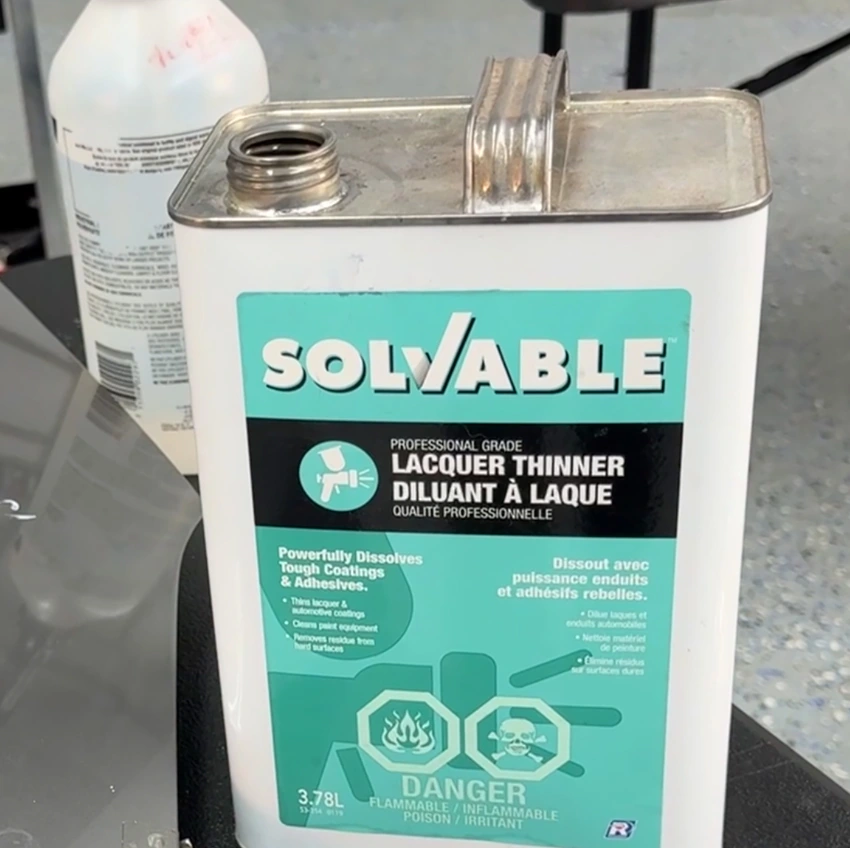
Chemical resistance is one of the most misunderstood parts of PPF. Many owners assume the top layer will shrug off anything, but different coatings react very differently to harsh solvents. We tested alcohol first, then introduced a stronger solvent to better observe separation between products.
In our testing, both 3M and XPEL held up very well with no visible damage under the solvent exposure used. This is a strong indicator of top-layer stability in harsh conditions.
STEK showed a notable weakness when exposed to stronger solvent: the top coat reacted and partially dissolved in our test. This doesn’t represent typical day-to-day exposure for most owners, but it does show a difference in chemical tolerance.
Outcome: Strong chemical resistance on 3M and XPEL. STEK showed a clear vulnerability under harsher solvent exposure.

Notable Results in This Category
XPEL and 3M Pro
3M and XPEL showed no signs of damage from solvent. STEK top layer started to dissolve on both samples
STEK FORCEshield and DYNOshield
Impact Resistance Test
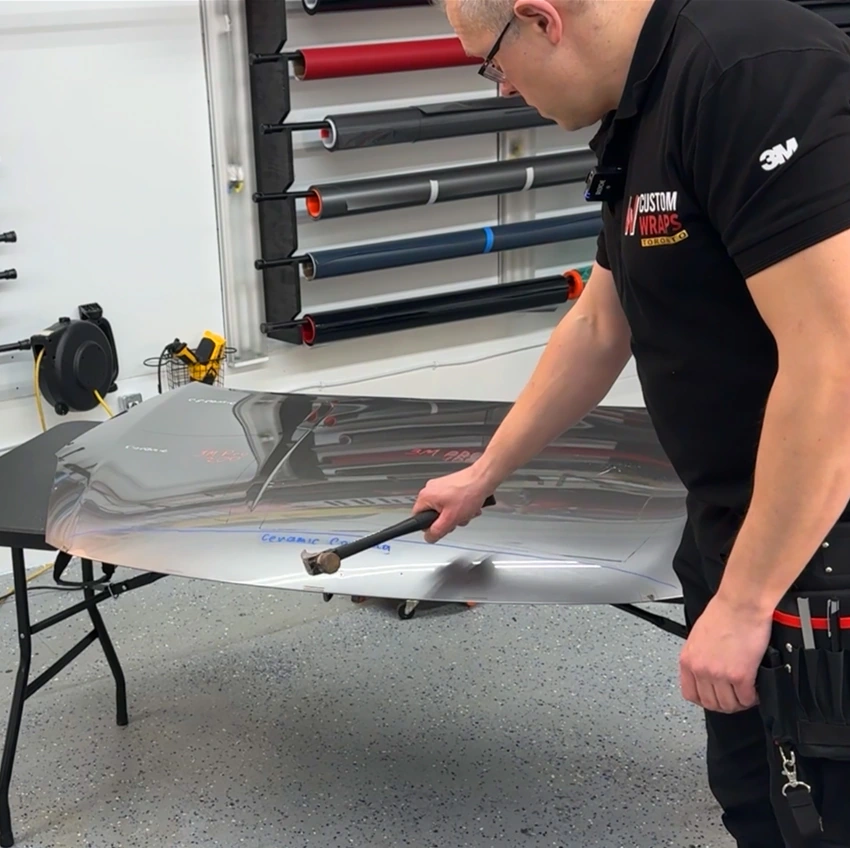
Impact resistance is the category with the most “hype” online — and it’s also the hardest to simulate perfectly in a shop. We performed a controlled impact simulation to observe how each film absorbed force and whether any sample showed clearly superior protection.
The key takeaway: there is no magic shield. Most premium PPF products are in a similar thickness range and provide a comparable level of protection against typical road debris. Under extreme, sharp impact, any film can be defeated.
In our test, strong impacts with a sharp contact point produced similar outcomes across the samples. That result lines up with real-world experience: PPF is excellent against everyday chips and abrasion, but it is not armor.
Outcome: Impact protection was similar across 3M, XPEL, and STEK at comparable thickness levels.

Notable Results in This Category
All films performed well
No visible difference between different samples.
None in this category.
Technical Specifications (What the Spec Sheets Say)
After seeing real-world outcomes, it’s useful to zoom out and look at manufacturer specs. Spec sheets don’t tell the whole story — and they often don’t predict day-to-day ownership experience — but they do help clarify what each product is designed to deliver.
Manufacturer Overview
3M is a Minnesota-based materials company with decades of experience in adhesives, coatings, and engineered films across multiple industries. Their PPF products benefit from large-scale manufacturing expertise and long-term materials R&D.
XPEL is a Texas-based company that focuses heavily on paint protection film and related vehicle surface protection products. Their brand is closely associated with premium PPF installs, especially in enthusiast and luxury markets.
Key Spec Differences to Pay Attention To
- Thickness: Most premium films cluster in a similar thickness range. Minor differences on paper rarely translate into dramatically different real-world chip protection, especially once installed on complex shapes.
- Warranty: Warranty length is important, but so is what it actually covers (yellowing, cracking, peeling, staining) and how claims are handled. Treat warranty as a confidence signal — not as proof that one film will “last twice as long.”
- Top coat behavior: The top layer influences stain release, marring, gloss appearance, and chemical tolerance. This is where two films of similar thickness can feel very different to own.
- Ceramic-infused vs. standard: Coated films can show stronger hydrophobic behavior out of the gate, but coatings can wear over time. The practical question is how the surface behaves after months of washing and real exposure.
Bottom line: Specs can support your decision, but the real differentiator is usually how the film’s top layer behaves in ownership — and how well it installs and ages on actual vehicles.
Overall Performance Summary
The most important conclusion from this comparison is that modern premium PPF is very competitive. None of the films tested “failed” at doing the job PPF is meant to do: protecting paint from everyday wear.
Where differences did show up, they were mainly in surface behavior — how the film handles marking, streaking, cleaning, and chemical exposure. These are the details that affect ownership experience and maintenance effort more than raw protection thickness.
It’s also important to acknowledge the limits of short-form testing. A controlled test can highlight surface differences, but some of the most meaningful characteristics only reveal themselves over months and years: edge stability, adhesive behavior, and how the film looks after repeated washes and real exposure.
In other words: this testing helps separate marketing from reality — but it should be combined with installer experience and long-term ownership priorities when choosing the right film for your vehicle.
Key Findings from Our 3M vs XPEL PPF Test
Long-Term Installer Insight (What Matters Beyond a One-Day Test)
After installing paint protection film for many years, we’ve learned that the “best” film isn’t just the one that wins a single category. Real-world satisfaction often comes down to how a product behaves during installation, how it holds edges over time, and how it looks after repeated washing and exposure.
Stretch Behavior
Films vary in how they stretch over complex shapes. The best experience is a film that stretches cleanly without visible distortion and lays down smoothly on curves, mirrors, and bumpers. This affects final appearance more than most people realize. In our experience XPEL PPF tends to install with less visible stretch marks and glue lines.
Edge Stability
Edge behavior is a major long-term factor. Good edge stability reduces the likelihood of lifting, contamination buildup, and visible lines after months of driving. Installation technique is critical here, but film characteristics still matter. Both 3M and XPEL films have some minor edge lifting at times.
Adhesive Strength & Handling
Adhesive systems differ. Some are more forgiving during installation; others bond aggressively and demand precision. The adhesive also influences long-term hold, especially in high-impact areas and tight transitions. 3M Pro-Series in our opinion has the best adhesive among all PPF. It holds best on the surface and what is very important - removes much better than other films if necessary.
Aging Patterns & Yellowing History
Long-term appearance is where many owners feel the difference. A film that looks “great on day one” may not be the film that looks best after a year of real driving. Stability over time is a meaningful part of overall value. 3M had several periods with yellowing in the past. These issues have been largely resolved.
This is why we don’t recommend choosing PPF purely on a spec sheet. The best decision combines real testing results with long-term installer experience and your personal expectations.
Which PPF Should You Choose?
There isn’t one film that dominates every category. The right choice depends on your vehicle, your expectations, and how you use the car. Here’s how we typically guide owners choosing between 3M and XPEL, based on both testing and real-world installation experience.
Choose XPEL if:
You own a black or dark-colored vehicle and prioritize the best possible day-one gloss.
You’re protecting a high-end / luxury vehicle where install finish is a top priority.
You care most about the “fresh install” look and a premium cosmetic presentation.
Choose 3M Pro Series if:
You prioritize durability and longevity and want a film that ages very consistently.
You value strong chemical resistance and low-fuss long-term ownership.
You want an “install it and forget it” product focused on protection over time.
Read more about our 3M Pro-Series PPF Installation Services
About STEK
STEK performed competitively in several test categories and is gaining traction in the market. However, we do not yet have the same depth of long-term installation history with STEK as we do with 3M and XPEL. For that reason, we include our test observations for context, but we avoid making strong long-term claims without years of ownership data.
If you want help choosing the best fit for your vehicle and driving habits, the most reliable approach is a quick consultation based on your paint condition, vehicle shape, and how you plan to maintain the car.
FAQ: 3M vs XPEL Paint Protection Film
Is 3M PPF better than XPEL?
Neither brand is “best” in every category. In our testing, 3M performed stronger in surface cleanup (marker/marring) and showed excellent overall durability signals, while XPEL stood out for initial visual finish. The right choice depends on whether you prioritize day-one appearance or long-term, low-fuss ownership.
Which PPF lasts longer?
Longevity depends on maintenance, climate, exposure, and installation quality, not just the brand name. Based on our long-term installation experience, 3M Pro Series tends to age very consistently over time. If long-term stability is your top priority, we typically lean toward 3M.
Is ceramic-coated PPF worth it?
Ceramic-coated (or ceramic-infused) PPF can improve water behavior and make cleaning easier, especially in the first months after installation. However, the hydrophobic effect can wear and may need maintenance or reapplication if you want to keep that “just coated” feel long-term. If you already maintain your car well, standard premium PPF can be a better value.
Does XPEL stain more easily?
“Staining” depends on what the film is exposed to and how quickly it’s cleaned. In our marker test, XPEL required more effort to fully remove the marks and needed additional cleaning help compared to 3M. That doesn’t mean XPEL will stain in normal use, but it did show less stain-release friendliness in that specific test.
Is 3M PPF more chemically resistant?
In our chemical resistance testing, both 3M and XPEL held up very well with no visible damage under the solvent exposure we used. Chemical resistance can vary by product line and by what chemicals are used, so it’s best to judge this as a category where both performed strongly rather than a single clear winner.
Which PPF is best for black cars?
On black and other dark colors, surface finish is more noticeable, especially right after installation. In our experience, XPEL tends to deliver an excellent day-one gloss and a very clean-looking finish, which can make it more preferable for high-end and dark-colored vehicles. If you care most about long-term stability over initial gloss, 3M remains a strong option.

We are the Toronto PPF experts! Call us (416) 700-9727 or request a quote.
Serving Toronto, Scarborough, Markham, North York, all GTA
445 Midwest Rd. Unit 31
Scarborough, ON M1P 4Y9
(416) 700-9727
info@customwraps.ca